
Change how your people show up—one moment at a time.
When recovery doesn't happen between moments, stress accumulates quietly until organizations begin seeing the consequences.
Most organizations track turnover. Few examine the nervous system driving it.
MyWholeMe helps employees recover from what just happened and prepare for what comes next—with short, personalized practices reinforced through live support, measurable engagement and outcomes.
Less carryover. More readiness. Greater consistency.


SERVICES
Why does yesterday keep affecting today?
Interaction → Activation → Carryover → Next interaction → More carryover → Fatigue → Disengagement
Not every difficult conversation ends when it ends. Sometimes it follows us...
into the next patient.
the next customer.
the next meeting.
the drive home.
our family.
the next day.
We call this Emotional Carryover™ and it compounds quietly before fatigue, disangagement and volatility appear. Organizations teach performance. Very few teach recovery. That missing capability is what MyWholeMe installs.
Complete the previous moment → Return toward neutral → Rehearse the next moment → Re-enter intentionally

01
Stability snapshot (Free)
A free 5-minute diagnostic that reveals early signs of workforce instability before they escalate into burnout, absenteeism, and turnover.
Get a Stability Risk Score, volatility indicators, and immediate insight into where overload may be accumulating across your frontline team.
02
Organizational nervous system audit
AI-powered analysis of workforce stress volatility and financial exposure.
A 6–12 month retrospective analysis that converts operational strain into measurable economic risk at the unit level.
03
90-Day stabilization pilot
Precision intervention. Measured impact. A controlled stabilization initiative within a single unit — with real-time economic tracking.
The pilot deploys targeted stabilization practices within one frontline department while the MyWholeMe system measures change weekly.
04
Stability intelligence dashboard
Operational risk intelligence for workforce stability. A permanent monitoring layer for organizational allostatic load and financial exposure. The Dashboard becomes a standing executive system for tracking.
This is not survey data. It is modeled operational volatility tied to economic levers.
05
Manager stabilization toolkit
Practical tools and playbooks that help managers reduce overload, reinforce team cohesion, and smooth volatility in real time.
Includes structured reset protocols, workload calibration guidance, and monthly stability briefings that turn insight into immediate operational adjustments.
06
Multi-unit stabilization expansion
Once stability is proven within one unit, MyWholeMe scales the model across adjacent teams — creating consistent workforce predictability across departments.
Track cross-unit volatility trends, benchmark stability performance, and build a repeatable stabilization framework system-wide.
Wellness access isn't the same as behavior change.
Most wellness platforms provide hundreds of resources.
MyWholeMe focuses on a small number of customized, practical recovery practices employees learn, rehearse, and actually use.
We don't build content libraries. We build habits.
Our technology provides contextual reminders, guided recovery practices, progress tracking, and team engagement, helping new habits become part of the workday.
Technology supports consistency.
People create change.
Who it’s for
Built for organizations where people move from one demanding interaction directly into the next:
-
Healthcare
-
Behavioral Health
-
Education
-
Public Safety
-
Customer Support
-
Social Services
-
Financial Services
-
Hospitality
-
Government
-
Any high-contact team.
We Bring
-
Workforce stabilization science
-
Nervous-system informed regulation protocols
-
Healthcare-specific strain modeling
-
Volatility and attendance analytics
-
AI-assisted overload detection (ethical & aggregated)
-
Unit-level Stability Index tracking
-
Embedded reset practices for frontline teams
-
Manager stabilization toolkits
Personalized measurements, recovery & readiness for the moments that matter.
Stability snapshot (Free)
A Bird’s-Eye View of System Strain
This brief signal scan measures early indicators of cognitive load, decision fatigue, and cultural tension — before they escalate into absenteeism, disengagement, and attrition.
Complete the 10-question Snapshot to receive your Organizational Nervous System profile and understand where stabilization may be needed.
TESTIMONIALS
From the frontline

Being a critical care physician assistant my job is highly stressful. I often find myself without the time or bandwidth to manage my own stress that comes with the job.
Attending the workshops was such a mental release, actually slowing down and focusing only on the activity. With the guidance and teaching, I felt a sense of relaxation and focus that I haven’t felt in years.
I highly recommend this for any health care provider as well as anyone dealing with the challenges this life brings!
Mason Devon, PA-C
Surgical oncology
Providence Saint John's Health Center
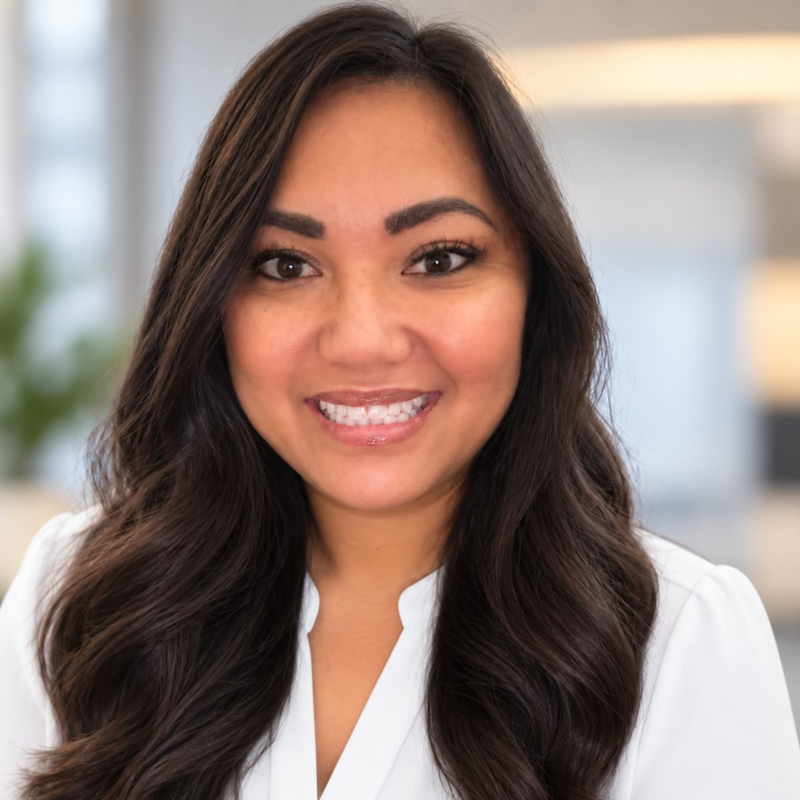
We are incredibly grateful for the care and intention you bring to each session. Our Kipunians leave feeling lighter, more grounded, and ready to take on the world with a renewed sense of energy and perspective.
Thank you for reminding us that vulnerability can be a source of strength, and for giving us the space and tools to continue evolving—not only as individuals, but as a community and company.
Lydia Pakpahan
IMPACT Chairperson
Kipu Health

I came into the workshop with a busy mind, feeling stretched thin by everyday stressors. The workshop gave me space to breathe and unwind in a way I didn’t expect.
Through creativity, I was able to express emotions I didn’t even realize I was holding. I left with new insights, a sense of calm, and practical techniques I can use anytime.
I’d recommend it to anyone looking for a refreshing, restorative, and non-traditional approach to self-care.
Leslie C. Muralles
Administrator
Kaiser Permanente
The signals appear before the metrics do.

We help you see what’s happening early—and give you the tools to change it.
Culture isn’t a perk. It’s infrastructure.